
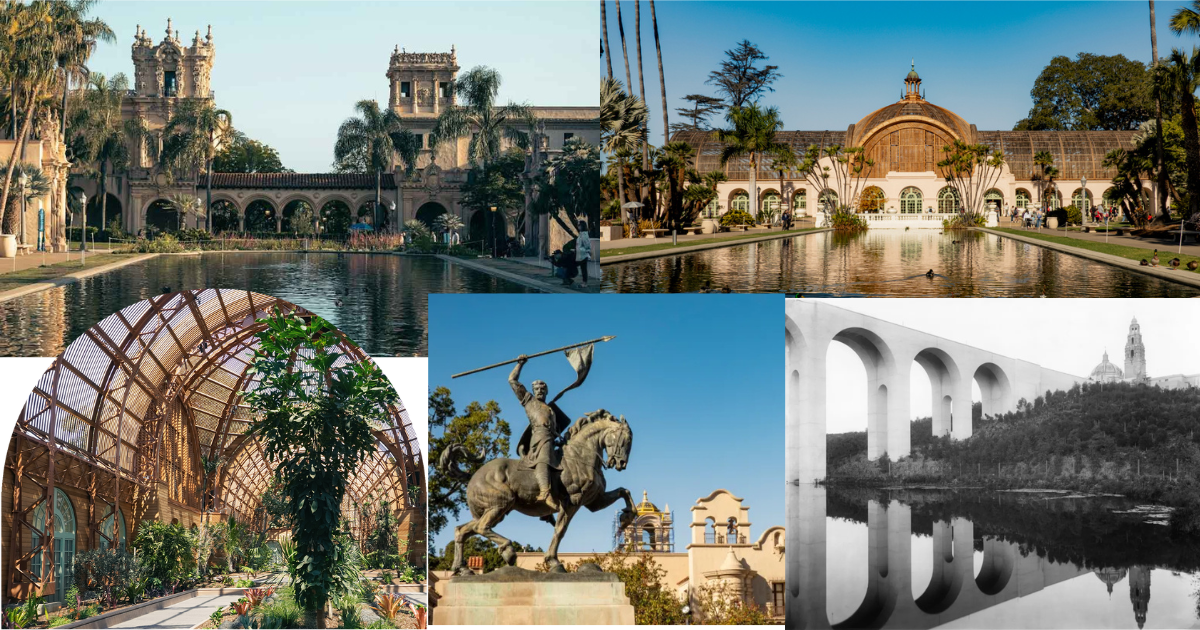
The Visionary Beginnings and Early Struggles in Balboa Park
San Diego launched an ambitious plan in 1868 to create a massive 1,400-acre urban park. Notably, this site was even larger than New York’s Balboa Park. However, the land remained a neglected expanse of coastal chaparral for decades. During this time, it was used for grim purposes like dumping grounds and slaughterhouses. Furthermore, it even housed a “pest house” for quarantined patients. This site was even larger than New York’s Balboa Park. However, the land remained a neglected expanse of coastal chaparral for decades. During this time, it was used for grim purposes like dumping grounds and slaughterhouses. Additionally, it even housed a “pest house” for quarantined patients. It was used for grim purposes like dumping grounds and slaughterhouses. It even housed a “pest house” for quarantined patients.
By 1902, the Chamber of Commerce hired Samuel B. Parsons, Jr. to protect the land from developers. Parsons wanted a design that respected the “genius of the place.” He recommended using climate-appropriate plants and preserving natural views. He urged the city to keep Balboa Park as a peaceful escape from urban life.
A war of Architectural Philosophies of Balboa Park
The park’s path changed forever with the 1915 Panama-California Exposition. The famous Olmsted Brothers were hired to design the grounds. However, a fierce internal conflict arose over where to put the buildings.
The Olmsted plan followed Parsons’ earlier advice. They wanted to build on the park’s edges to keep the center natural. But lead architect Bertram Goodhue and Frank P. Allen, Jr. disagreed. They insisted on building a “Spanish Colonial Revival fantasyland” in the very heart of the park. This “exposition fever” led the Olmsted Brothers to resign. They viewed the new plan as an “outrageous disfigurement” of the park’s natural beauty.
Engineering a Horticultural Miracle
Following the Olmsted resignation, Frank P. Allen, Jr. and nursery supervisor Paul G. Thiene took on an enormous venture. Their goal was to remodel a desert-like landscape into a lush paradise. However, the undertaking required extreme measures. Since the ground consisted of rocky hardpan soil, employees used dynamite to blast through the earth before any planting could begin.
Creating a New Eden
Despite these challenges, the team defied the odds and curated a “New Eden.” They successfully planted over two million specimens from 1,200 different species. When the exposition finally opened in January 1915, visitors entered a vibrant paradise. They were greeted by beautiful poinsettias, bougainvillea, and towering palm trees.
A Legacy of Tropical Aesthetics of Balboa Park
This “Garden Fair” was a massive success for San Diego. Consequently, it fundamentally changed landscaping norms across all of Southern California. The event popularized thirsty, tropical styles over the region’s natural, arid flora. As a result, the park’s transformation created a lasting visual identity that defined the coastal Southwest for the next century.
Defining the Coastal Southwest
Moreover, this shift in aesthetics influenced residential and commercial gardening for decades. Developers and homeowners began to favor the lush, vibrant look of the exposition over the local desert landscape. Ultimately, the 1915 fair established the “green” image that many people still associate with California today.
A worldwide Cultural and Cinematic Landmark of Balboa Park
Over the numerous years, Balboa Park superior from a short exposition net on line into the permanent cultural coronary heart of San Diego. Nowadays, it’s far from a chosen California Cultural District home to sixteen museums, acting arts centers, and the arena-renowned San Diego Zoo. Its precise Spanish Colonial structure has not super attracted loads of lots of tourists however has moreover served as a backdrop for iconic films like Citizen Kane and site visitors. From the soaring California Tower to the weekly unfastened live suggests at the Spreckels Organ Pavilion, the park has efficaciously transitioned proper right into a multi-use sanctuary that blends historic protection with cutting-edge-day undertaking.
Keeping the Legacy for the 21st Century of Balboa Park
As Balboa Park entered its 2nd century, it confronted new challenges, together with excessive-profile vandalism of the historical Lily Pond and complicated debates over visitors rerouting. The 2015 Centennial birthday party marked a period of renewal, leading to the “adopt-a-Plot” software and the return of the historical “Electriquettes” wicker carts. At the same time as present-day-day updates much like the San Diego Comic-Con Museum and new pedestrian plazas retain to reshape the park, the middle anxiety stays: balancing the high priced, “artificial” splendor of the 1915 sincere with the sustainable, water-conscious recommendation of its unique planners. These days, attracting 12 million traffic yearly, the park remains a testament to the ambitious ambition of a small city that dreamt huge a century in the past.
What changed into the state of affairs and utilization of the park land in advance when professional improvement started in 1902?
Earlier than Samuel B. Parsons, Jr. have turned out to be hired, the 1,4 hundred-acre website 8db290b6e1544acaffefb5f58daa9d83 has become a disregarded expanse of herbal coastal chaparral. It served several “grim” non-park purposes, which include a dumping ground, a taking pix variety, an outside slaughterhouse, and a “pest residence” used to quarantine humans with communicable illnesses.
Why did the 9aaf3f374c58e8c9dcdd1ebf10256fa5 Olmsted Brothers renounce from the Panama-California Exposition project?
The Olmsted Brothers resigned because of a vital war of words over the place of the exposition houses. They wanted to preserve the park’s herbal center through placing systems on the perimeter. While lead architects insisted on building a “Spanish Colonial Revival fantasyland” proper away at the great mesa, the Olmsteds considered it as an “outrageous disfigurement” and stepped down.
How did the engineering enterprise benefit the “horticultural miracle” seen inside the 1915 exposition?
The transformation modified right right into a large bodily venture. due to the truth the ground was modified to be composed of rocky hardpan, personnel needed to use dynamite to blast through the soil earlier than something might be planted. This allowed the team to plant over a million specimens of one,two hundred particular species, developing a lush “New Eden” that basically shifted Southern California’s landscaping closer to tropical aesthetics.
How has Balboa Park impacted the area of cinema and way of life?
Past being a California Cultural District with 16 museums and the San Diego Zoo, the park’s unique Spanish Colonial structure has made it a maximum suitable filming location. It considerably served as a backdrop for the legendary movie Citizen Kane (representing the Xanadu property) and the award-prevailing film website on-line site visitors.
What is the number one assignment or “middle anxiety” managing Balboa Park in the 21st century?
The current venture lies in balancing historic splendor with environmental sustainability. The park must manage the public’s love for lush, thirsty greenery. This “artificial” style was established during the 1915 fair. At the same time, the park must follow water-conscious advice. Original planners suggested sustainable methods to protect natural resources. Balancing these two needs is a key challenge today.
Conclusion:
Balboa Park is the very last achievement of a small town’s large ambition. San Diego turned a rugged “pest house” site into a Spanish Colonial masterpiece. This created a world-class cultural hub that attracts millions today. Its lush landscape moved away from the original sustainable vision. However, it gave Southern California an iconic “garden fair” identity. Today, the park balances historic preservation with modern sustainability. It remains the thriving, innovative heart of San Diego.