
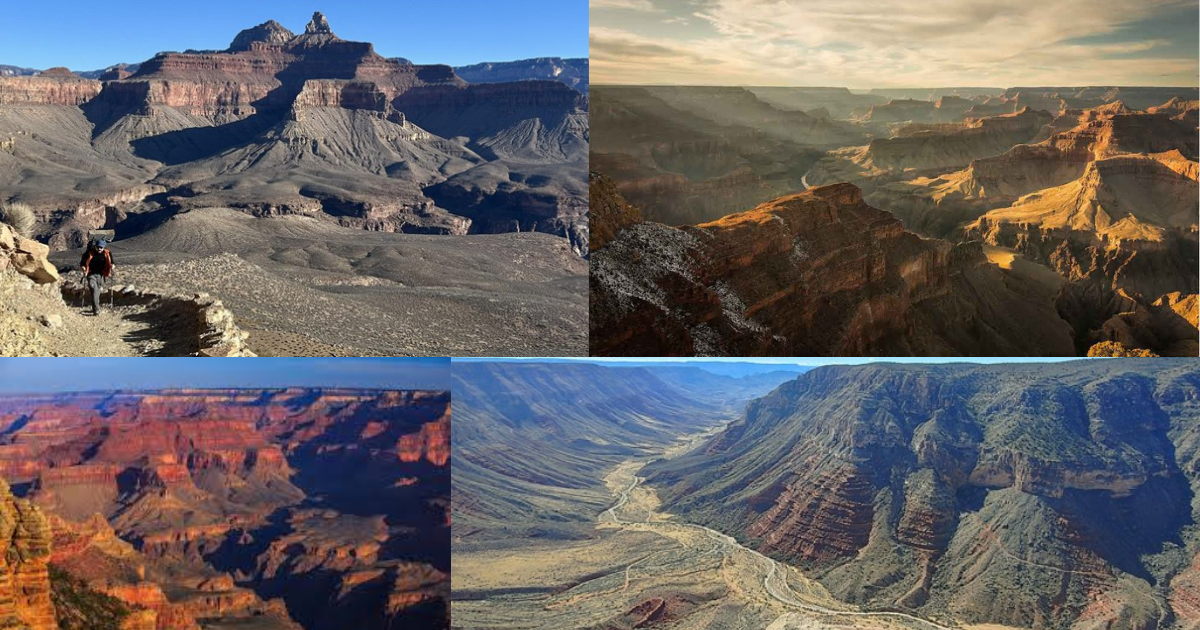
Grand Canyon National Park (Arizona) is more than just a massive rift in the Earth’s surface; it is a geological diary stretching back nearly two billion years. This National Park spans 277 miles along the Colorado River. It stands as a testimony to nature’s raw power. Visitors can view it from the sky or hike its rugged trails. Either way, the canyon’s massive scale awes over six million people every year.
A Geological Masterpiece in Grand Canyon National Park (Arizona)
The Grand Canyon is a mile-deep gorge that scientists estimate started forming roughly 5 to 6 million years ago.The Colorado River cuts through the landscape to reveal layers of Earth’s history. The environment transitions from evergreen forests at the rim to stark deserts at the floor. After his 1903 visit, President Teddy Roosevelt famously declared, “You cannot improve on it.” He urged the world to leave the canyon exactly as it is for future generations.
Aerial Perspectives: Sedona and Beyond
To truly appreciate the “Big Ditch,” many tourists begin their journey with Sedona Air Tours. From the vibrant red rocks of Sedona to the expansive Ponderosa Pines of Northern Arizona, air tours provide an unparalleled vantage point. Helicopter tours like the “Canyon Panorama” glide over ancient mining towns and wilderness canyons, while airplane tours offer a concise but comprehensive evaluation of iconic landmarks like Cathedral Rock and Bell Rock.
Exploring Grand Canyon National Park (Arizona) Rims
Two main regions divide the park, each offering a distinct experience.
-
The South Rim: Open year-round, this is the most accessible area. It features the historic Grand Canyon Village and famous overlooks like Mather Point and Desert View Watchtower.
-
The North Rim: Sitting 1,000 feet higher, the North Rim is cooler and more remote. It is a “different world” with wildflower meadows and large bison herds. However, it is typically closed to vehicles in the winter (November to mid-May).
Trails for Every Adventurer
With over 600 miles of trails, the park offers everything from paved walks to grueling expeditions. The Rim Trail is the most popular, presenting a often level, 13-mile paved route with stunning vistas. Most people stay at the top; however, for those brave enough to venture below the rim—which is less than 5% of visitors—the Bright Angel Trail offers a well-maintained descent. This path includes water stations and shade, ultimately leading to the famous Phantom Ranch at the canyon floor.
A Sanctuary for Desolate Tract Wildlife
Grand Canyon National Park (Arizona) is a “Globally Important Bird Area,” home to 447 bird species including the endangered California Condor. On land, visitors frequently spot elk along the South Rim, bighorn sheep on rocky ledges, and the unique tassel-eared Abert’s squirrel. The remote North Rim even harbors one of the nation’s largest unfenced bison herds, adding to the park’s rich biological diversity.
1. When is the fine time to visit to avoid crowds?
Winter is the best time for solitude, as the canyon is often mantled in snow and the crowds disappear. However, the “shoulder seasons” of April–May and September–October provide a fine balance of pleasant climate and manageable visitor numbers.
2. Are there any present day closures I need to know about?
Yes. Due to the Dragon Bravo fire, the North Rim is currently scheduled to stay closed until May 15, 2026. Always test the official National Park Service updates before planning your journey.
3. What’s the safest trail for hiking into the canyon?
The Bright Angel Trail is considered the most secure and best-maintained route. It features emergency phones, bathrooms, shade structures, and water refilling stations at various points along the descent.
4. Can I drive my own car to all the viewpoints?
Throughout the peak season (March 1 to November 30), personal vehicles are prohibited on Hermit Road. Visitors must use the park’s free shuttle bus system, which has seen over 7.6 million boarding.
5. How excessive is the Desert View Watchtower?
Furthermore, architect Mary Colter designed the tower to sit on a perch more than 5,000 feet above the canyon floor Visitors can climb 85 steps to the observation deck to see murals by Hopi artist Fred Kabotie.
Conclusion:
Grand Canyon National Park (Arizona) is more than just an object on a bucket list; it is a sanctuary of deep time and natural beauty. From the architectural masterpieces of Mary Colter to the rugged, silent trails of the North Rim, the park challenges our sense of perspective. Ultimately, whether you hover above the red rocks in a helicopter or sit on the back patio of a historic hotel, the experience reminds you of the enduring power of the American wilderness.