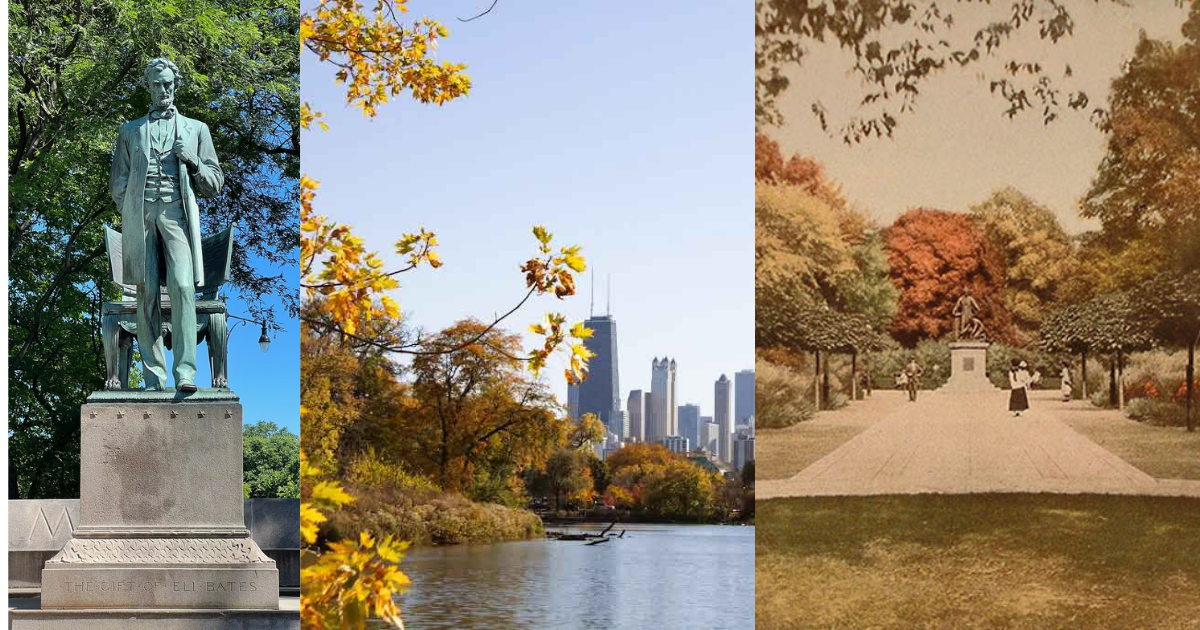
The call Lincoln Park resonates within the route of the Yankee panorama, however it tells a remarkably unique story relying on where you stand. Three locations share one name. They span from Capitol Hill to Lake Michigan and the Detroit River. Though separate, they share a common identity. Each offers a unique legacy of history, nature, and community. Though they are miles apart, they are bound by a common identity.
Washington, D.C.: A Monument to improvement
inside the coronary heart of the U.S. ‘S.A.’ A. ‘s One of the city’s oldest public areas lies in the capital. Pierre L’Enfant included it in his 1791 plan. During the Civil War, the park served as a hospital for wounded Union soldiers. Walt Whitman even visited the site to console the fallen.
These days, Lincoln Park is a powerful landscape of reminiscence, offering landmark monuments:
The Emancipation Memorial was funded entirely by donations from formerly enslaved people. Charlotte Scott started the campaign with the first $5 she earned as a free woman. The statue features Abraham Lincoln and Archer Alexander. Alexander was the last man captured under the Fugitive Slave Act. Despite its history, the memorial has sparked deep debate over its depiction of African Americans.
The Mary McLeod Bethune Memorial was unveiled in 1974. It was the first statue of an African American woman on public park land in D.C. To honor her, the nearby Lincoln statue was turned 180 degrees. The two icons now face each other. This creates a silent, eternal conversation between them.
Chicago: The metropolis Oasis
Chicago’s Lincoln Park is a sprawling masterpiece of hobby and conservation. built upon the traditional homelands of the Council of three Fires (the Ojibwa, Odawa, and Potawatomi), it has become one of the most colorful metropolis parks worldwide.
Whether you are a local or a traveler, the park offers many places to explore. You can visit the Alfred Caldwell Lily Pool or the North Pond Nature Sanctuary. The Montrose Point Bird Sanctuary is a haven for migratory species.
The park also features the Lincoln Park Zoo and a Victorian-style conservatory built in 1895. For exercise, you can enjoy 7.5 miles of lakefront trails and five beaches. There are also three boat harbors and a nine-hole golf course. It is the city’s premier outdoor destination.
Lincoln Park, Michigan: From “Ribbon Farms” to Cityhood
In truth south of Detroit lies the city of Lincoln Park, a community with deep roots within French colonial technology. inside the starting Potawatomi land, it modified deeded to Pierre St. Cosme in 1776 “for romance and affection.”
The data of this location is a fascinating timeline of yank increase:
French Ribbon Farms: Early settlers set up extended, slender farms that fronted the Detroit and Rouge Rivers, names that still grace network streets these days like Beaubien and Cicotte.
The financial boom: within the early 1900s, the community transformed. mannered to Henry Ford’s $5-a-day salary, hundreds of human beings moved to the region, fueling a populace explosion that grew to end up the village proper into a town with the aid of 1925.
A Mature network: these days, it stands as a solid, historic town regarded for its superb schools, cute parks, and a museum that preserves the neighborhood facts of the folks that built the “Motor city” location.
One call, Many Legacies
Whether or not or not or no longer you’re strolling the lakefront in Chicago, reflecting on civil rights in D.C., or using the historic streets of Michigan, “Lincoln Park” represents the layers of the yank tale—from Indigenous roots and colonial settlements to the continuing pursuit of top notch and the clean pride of a day in the park.
Who funded the Emancipation Memorial in Washington, D.C., and why is it historically 86f68e4d402306ad3cd330d005134dac?
The monument has become funded really via a way of using donations from previously enslaved people, extra often than no longer African American veterans. The advertising and advertising campaign started out with the useful resource of manners of Charlotte Scott, a formerly enslaved lady who donated the primary $five she earned as a freed person. As the first city site named for Abraham Lincoln, this park continues to spark debate over historical memory.
What alternate changes are made to the layout of D.C. ‘s Lincoln Park in 1974, and why?
In 1974, the Mary McLeod Bethune Memorial changed into unveiled, marking the primary time a statue of an African American woman has become located on non-public park land in Washington, D.C. To honor this new addition, the genuine Emancipation Memorial (which previously faced west in the direction of the U.S. Capitol) changed into turned spherical one hundred eighty tiers to stand the Bethune Memorial, symbolizing a speech to the numerous 2 leaders.
Which Indigenous global places are identified due to the truth of the conventional populace of the land that is now Chicago’s Lincoln Park?
The Council of Three Fires—the Ojibwa, Odawa, and Potawatomi—originally held these unceeded homelands. The vicinity modified into moreover domestic to over a dozen specific tribes, together with the Fox, Ho-chew, Illinois Confederacy, and Miami, amongst others.
What are “ribbon farms,” and the way do they relate to the information of Lincoln Park, Michigan?
In the early 1700s, Antoine de la Mother Cadillac granted “ribbon farms” to French settlers. These were long, narrow strips of land. Each farm fronted the Detroit or Rouge Rivers and stretched miles back into the woods. Today, many street and family names in Lincoln Park come from these original French farmers. Names like Beaubien, Cicotte, and LeBlanc still honor this history.
How did the Ford Motor enterprise have an impact on the increase of Lincoln Park, Michigan, inside the twentieth century?
The community noticed a large expansion due to Henry Ford’s $five-a-day salary. This quite immoderate income allowed many commercial enterprise company people to control to pay for their very 255fb4167996c4956836e74441cbd507 assets. And accumulate homes in Lincoln Park. This increase helped the place transition from a village in 1921 to a valid town in 1925.
Conclusion:
The legacy of Lincoln Park is a powerful cross-section of American history. It weaves together civil rights, nature conservation, and industrial growth. From D.C.’s monuments to Chicago’s urban sanctuaries and Michigan’s “ribbon farms,” these places show how one name anchors many memories. Together, they serve as living documents. They honor Indigenous roots and historic milestones while remaining vital hubs for community life today.